All-Terrain Vehicle (ATV) Bill of Sale Form
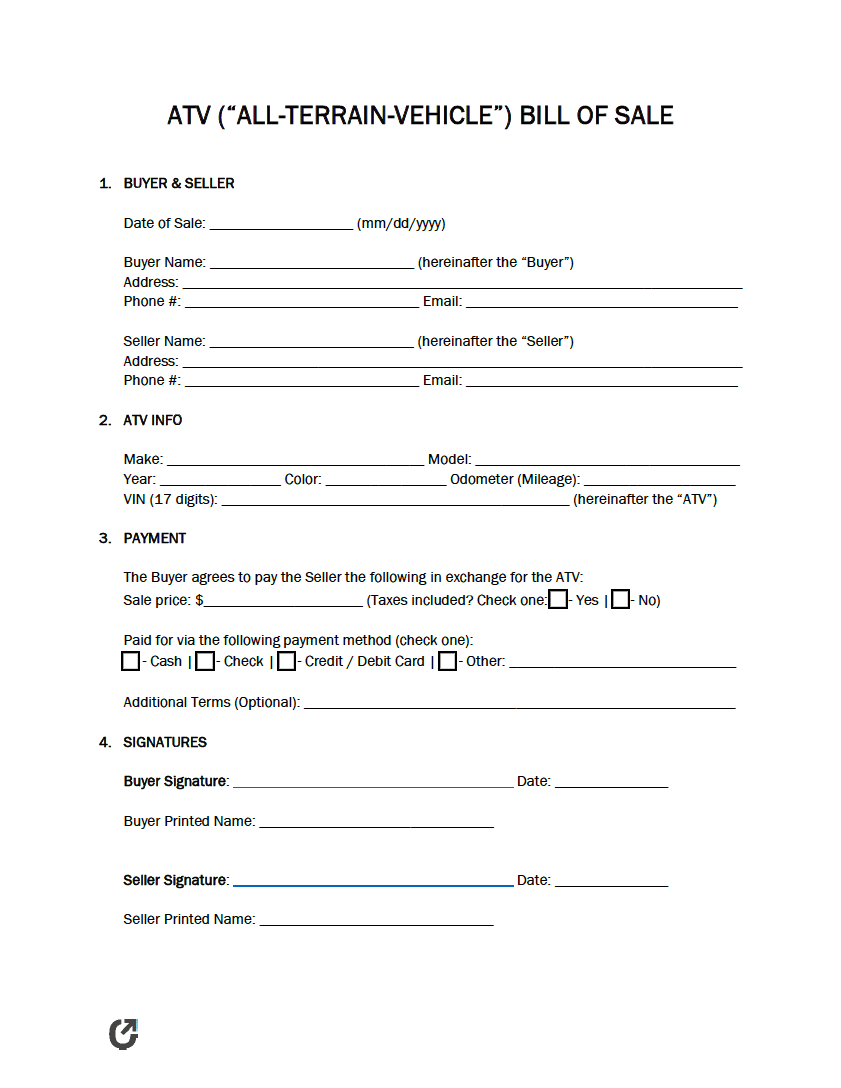
An all-terrain vehicle (ATV) bill of sale form validates the transfer of a four-wheeled utility vehicle from a seller (the previous owner) to a buyer (the new owner). ATVs can carry cargo, transport people, and tow property. Individuals can also use them leisurely when riding on trails and roadways. With a bill of sale form, the owner can show another person or entity that they rightfully purchased and acquired the vehicle. While not all states require this document, it is highly recommended since it has many uses. It serves as a record keeper of previous and current owners and also identifies the ATV’s make, model, and value if it is lost or stolen.
Summary
|
ATV Bill of Sale: By State
- Alabama
- Alaska
- Arizona
- Arkansas
- California
- Colorado
- Connecticut
- Delaware
- Florida
- Georgia
- Hawaii
- Idaho
- Illinois
- Indiana
- Iowa
- Kansas
- Kentucky
- Louisiana
- Maine
- Maryland
- Massachusetts
- Michigan
- Minnesota
- Mississippi
- Missouri
- Montana
- Nebraska
- Nevada
- New Hampshire
- New Jersey
- New Mexico
- New York
- North Carolina
- North Dakota
- Ohio
- Oklahoma
- Oregon
- Pennsylvania
- Rhode Island
- South Carolina
- South Dakota
- Tennessee
- Texas
- Utah
- Vermont
- Virginia
- Washington
- West Virginia
- Wisconsin
- Wyoming
Contents |
What is an ATV Bill of Sale?
An ATV bill of sale is a document that is used to officially transfer the ownership of a four-wheeler. It proves that the buyer is the rightful owner of the ATV and has paid for it in full.
Completing and signing an ATV bill of sale is highly recommended for a few reasons. The form acts as a receipt as it shows how and when the sale occurred. It is needed for the titling and registering process in many states, as well.
The buyer can use the bill of sale to defend themselves if the following occur with the ATV:
- After the sale occurs, the seller reports it as stolen.
- It is discovered that the seller used it while engaging in illegal activity.
- The seller still owes money on the loan or has debts associated with it.
Similarly, it protects the seller if the buyer causes damage or acts illegally with the ATV after the purchase, or if they are injured or die in an accident with it.
ATV Laws: By State
The chart below lists the locations of registration offices and requirements for having a bill of sale, registration, and title for an ATV. In addition, it contains the laws for each state concerning operating and owning.
* = unless operated on public property.
** = unless purchased through a dealer.
*** = ID plate only.
**** = unless the ATV has a registration.
***** = unless it is a new ATV above 50 cc.
How to Write (5 Steps)
Step One – Buyer + Seller Information
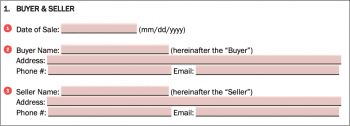
In the first section of the bill of sale (labeled “Buyer & Seller”), enter the date of the month, day, and year of the sale. In the following sections, write the name of the buyer and seller, as well as their address, phone number, and email.
Step Two – ATV Information
List the specific details of the ATV in the section called “ATV Info.” This includes the following information:
- Make
- Model
- Year
- Color
- Odometer (Mileage)
- Vehicle Identification Number (VIN)

Step 3 – Payment Details
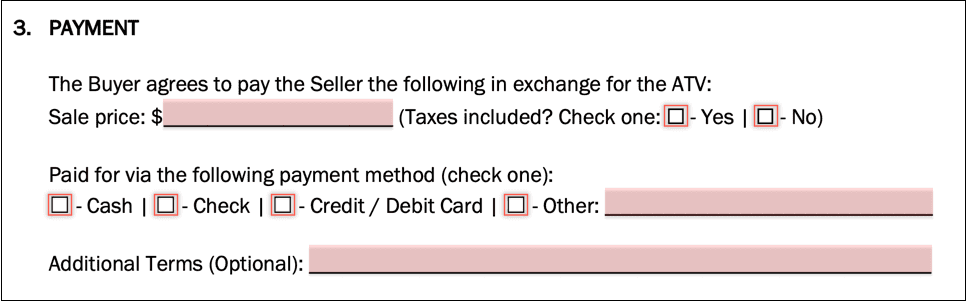
The “Payment” section outlines the exact details of the transaction. Enter the sale price ($) and check off the “Yes” or “No” box depending on whether or not taxes were paid. Indicate the method of payment used (i.e. cash, check, credit or debit card, or other) by selecting the box next to the correct option. If there are additional terms, list them on the line called “Additional Terms (Optional).”
Step 4 – Signature(s)
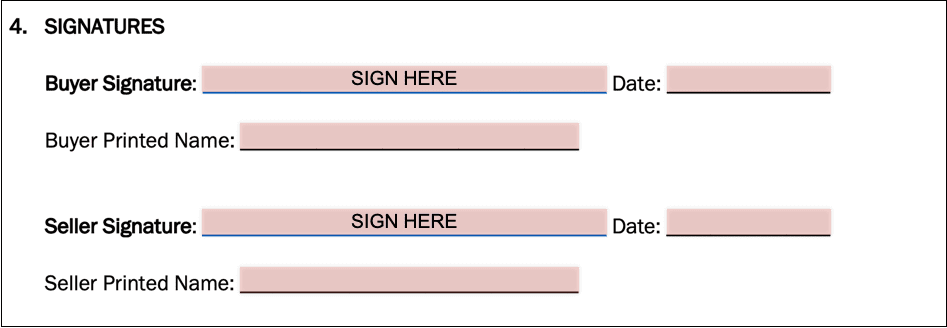
In the fourth section listed “Signatures”, the seller and buyer must sign, print their name, and date the form.
Step 5 – Notarization (Optional)
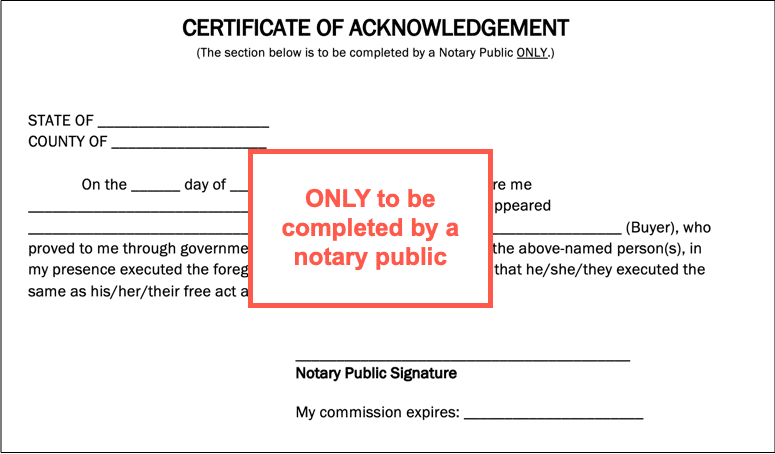
Notarization must be carried out by an authorized notary public. After they witness the buyer and seller sign, they stamp it physically or digitally. Since notarization is not required by each state, it is important to check local laws to check if it is needed.
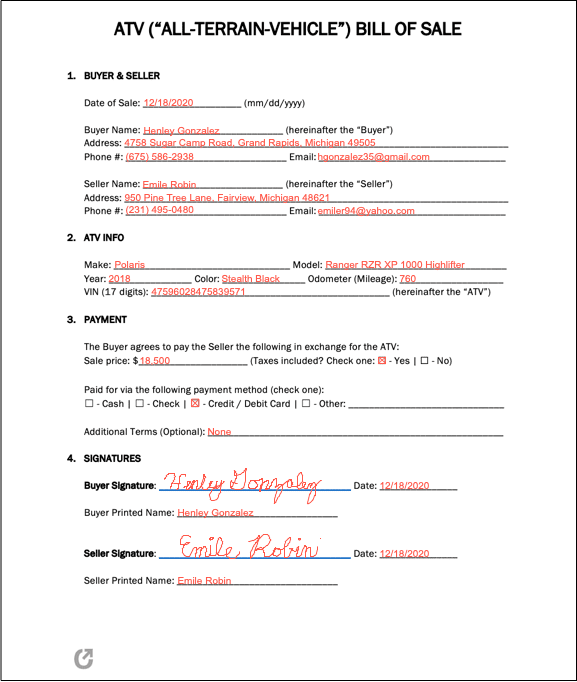
Sample: ATV Bill of Sale