
Maryland General Bill of Sale Forms
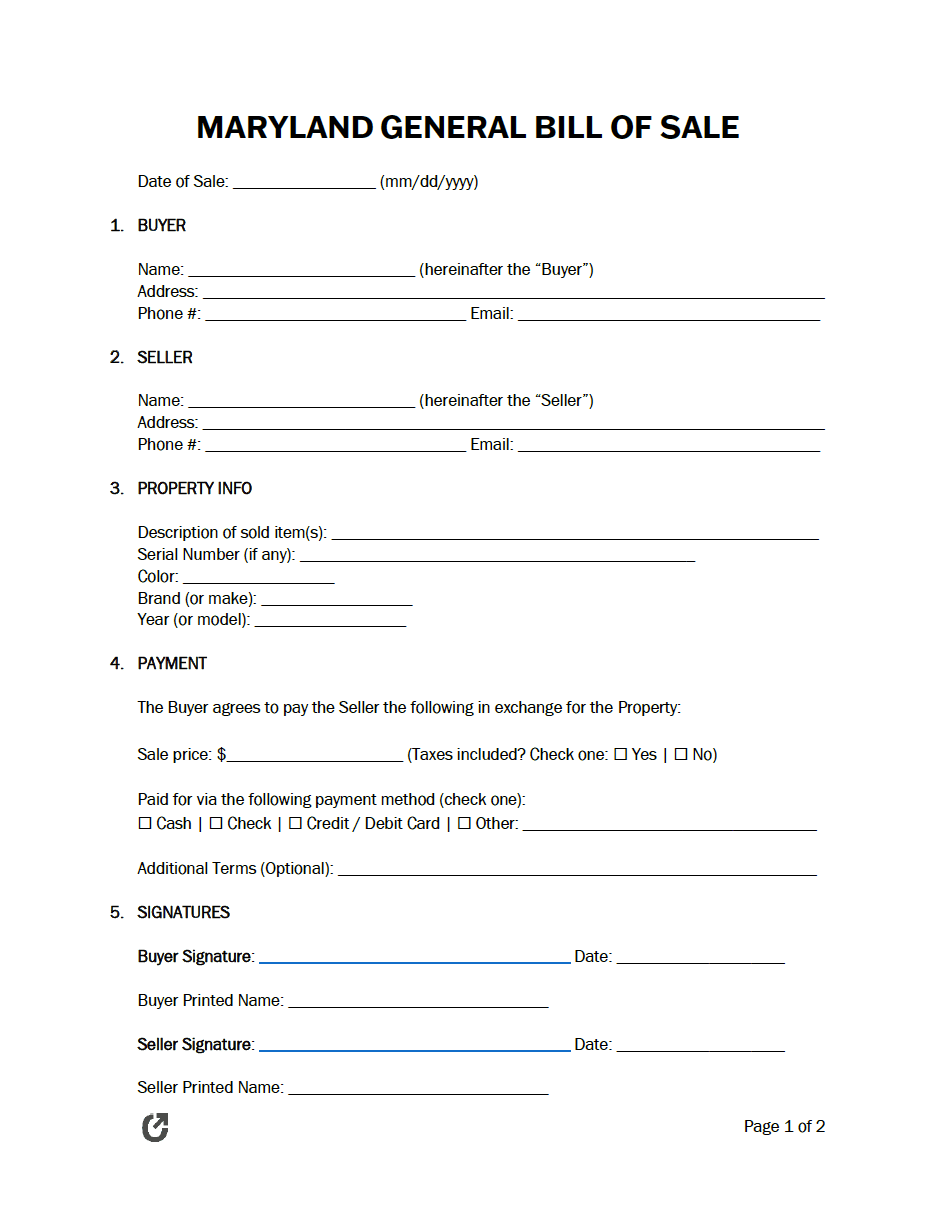
A Maryland general bill of sale form encompasses the relations between a buyer and seller. Both parties discuss their preferences and choose the best course of action for transferring ownership of an item. The form essentially broadcasts the agreement for the state, government, or relevant parties to read or view. It shows that the buyer willingly purchased the object for the set price, and the seller accepted the money before handing it over. Sales involving trade or gift (instead of cash) must list the necessary details in the document.
| Signing Requirements: The former and new owners need to sign their names. |
What is a Maryland General Bill of Sale?
A Maryland general bill of sale serves as a prelude to the transfer from one person to another. Each party completes the form before exchanging money or the agreed-upon trade item. Filling out the document ensures that both people handle the deal as listed. If someone does not carry out their responsibility, then the other person can use the form to take legal action against them. Therefore, all sales should involve a bill of sale to protect the buyer and seller.
Does Maryland Mandate Bill of Sale Forms?
Maryland requires a notarized bill of sale form if the necessary information does not appear on the title or manufacturer’s certificate of origin (MCO). In this instance, it must have the purchase price, sale date, seller’s signature, and buyer’s name and address.
Otherwise, the owner does not need to present a bill of sale except if the vehicle has a model year of 7 years or newer and sold for less than the assessed (or book) value.
Does it Require Notarization?
When presenting a Maryland bill of sale, it must have a notary public signature, seal, or stamp, under any circumstance. Notarization gives the document credibility, especially when presented to the state or another official entity.