
Pennsylvania General Bill of Sale Form
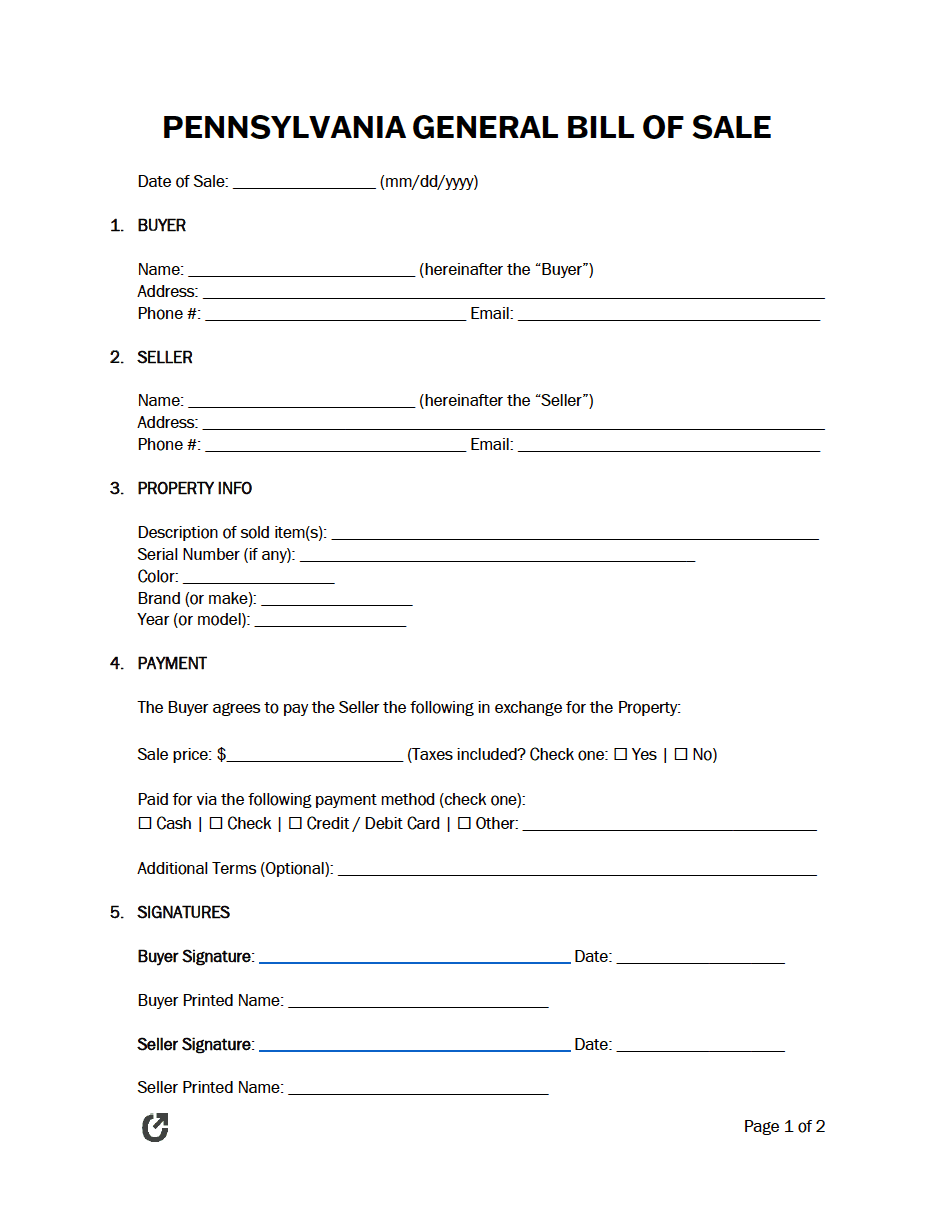
A Pennsylvania general bill of sale form binds individuals to the agreed-upon terms of a transaction. It determines how both parties intend to transfer the item and its cost. Each person involved must sign to indicate their understanding of the agreement and confirm their intention to fulfill the requests stated in the form. The document also safeguards the buyer and seller as it officially records the ownership change, thus establishing a reference sheet for the sale. For this reason, both individuals must ensure they fill it out with accurate and detailed information.
| Signing Requirements: The buyer and seller must sign the document. |
What is a Pennsylvania General Bill of Sale?
A Pennsylvania general bill of sale form ensures a secure and straightforward transaction. The document must list the full names and addresses of the purchaser and seller, along with a comprehensive report of the item sold. Its description must include pertinent information about the property, such as its make, model, serial number, or other characteristics. In addition, both parties should list the payment method, amount, and other warranties or guarantees. Following these steps ensures a transparent and smooth transaction while also serving as a vital tool in averting potential disputes in the future.
When Do Purchasers Require a Bill of Sale?
Purchasers require a bill of sale form when proving ownership. The individual often needs this verification when selling, registering, or titling an item. People often use a bill of sale form to transfer a boat, car, motorcycle, or trailer. However, they can also create one for other valuable items, such as jewelry, electronics, and other prized possessions.
This document is critical in outlining liability by ensuring the seller isn’t held accountable for future violations or incidents involving the item sold. Moreover, it serves as proof of the transaction, protecting both parties from potential fraud or disputes. The bill of sale also aids in accurately calculating sales tax, thereby promoting compliance with tax regulations. Completing this vital document promotes transparency and legality in the transaction process, fostering a safer and more secure trading environment.
Is Notarization a Requirement?
In Pennsylvania, buyers and sellers do not have to notarize their bill of sale forms. Nonetheless, the state suggests that both parties complete the notarization process to ensure the document’s legitimacy. This seal of approval verifies the identities of each individual and the authenticity of their signatures.