
Ohio Medical Power of Attorney Form
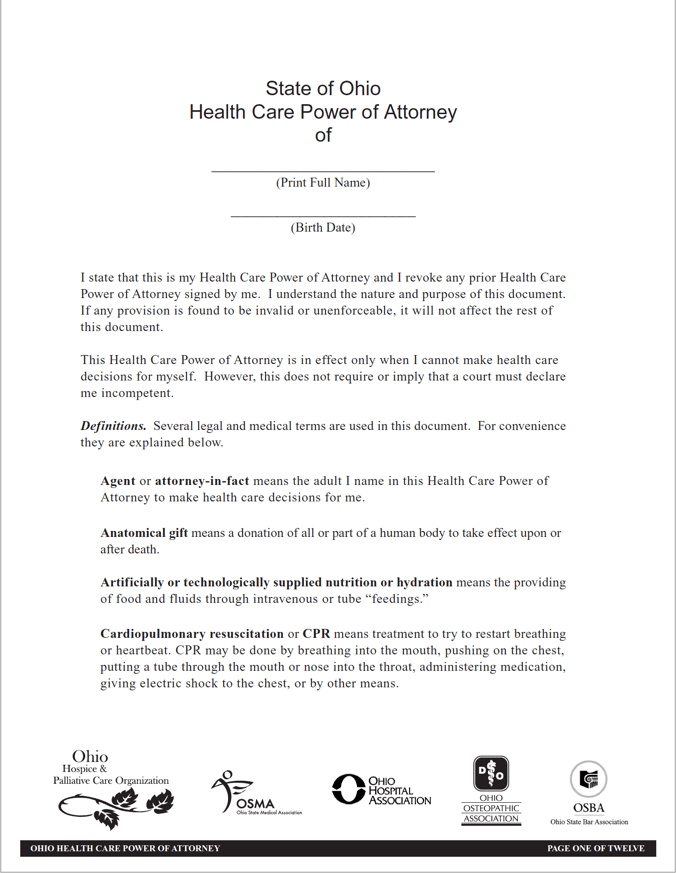
An Ohio medical power of attorney is a form that allows an agent to make decisions to improve or treat a principal’s health condition. It is only effective if the principal becomes incapacitated because of a terminal illness or traumatic injury. Completing this form allows the principal to explain their preferences for medical care if they cannot speak for themselves.
The agent is legally required to follow the principal’s wishes (if any) before determining their treatment. If the principal does not list their preferences, the agent may be responsible for choosing their physician, hospital, and treatment or care (e.g., medical testing, medication, life support, surgery, etc.). If the principal does not want resuscitation, they must include a do-not-resuscitate (DNR) form (which must be signed and dated by a physician).
The agent has limitations on the medical decisions that they can make on the principal’s behalf. If the principal has included restrictions in the form, the agent must abide by those guidelines. Ohio law also places limitations on an agent when determining care for a principal. For example, if a principal is permanently unconscious or terminally ill, the agent cannot:
- Discontinue life-sustaining treatment (unless two (2) physicians confirm that the principal is incapacitated and will not regain consciousness);
- End comfort care or pain relief for the principal;
- Withdraw treatment that would result in the termination of the principal’s pregnancy (unless two (2) physicians verify that the treatment or pregnancy would endanger the life of the principal and/or fetus);
- Stop artificial nutrition or hydration (unless two (2) physicians attest that nutrition or hydration would not bring comfort or pain relief to the principal and the principal has approved the withdrawal of nutrition and hydration in the medical power of attorney); and/or
- Terminate treatment that the principal has requested in the medical power of attorney (unless the treatment is no longer beneficial or becomes irrelevant to the principal’s health).
Laws: § 2133 & §§ 1337.11 to 1337.17
Signing requirements (§ 2133.02(B) & § 1337.12(A)(b)) – The principal, two (2) witnesses, and a Notary Public must sign.