
West Virginia Medical Power of Attorney Form
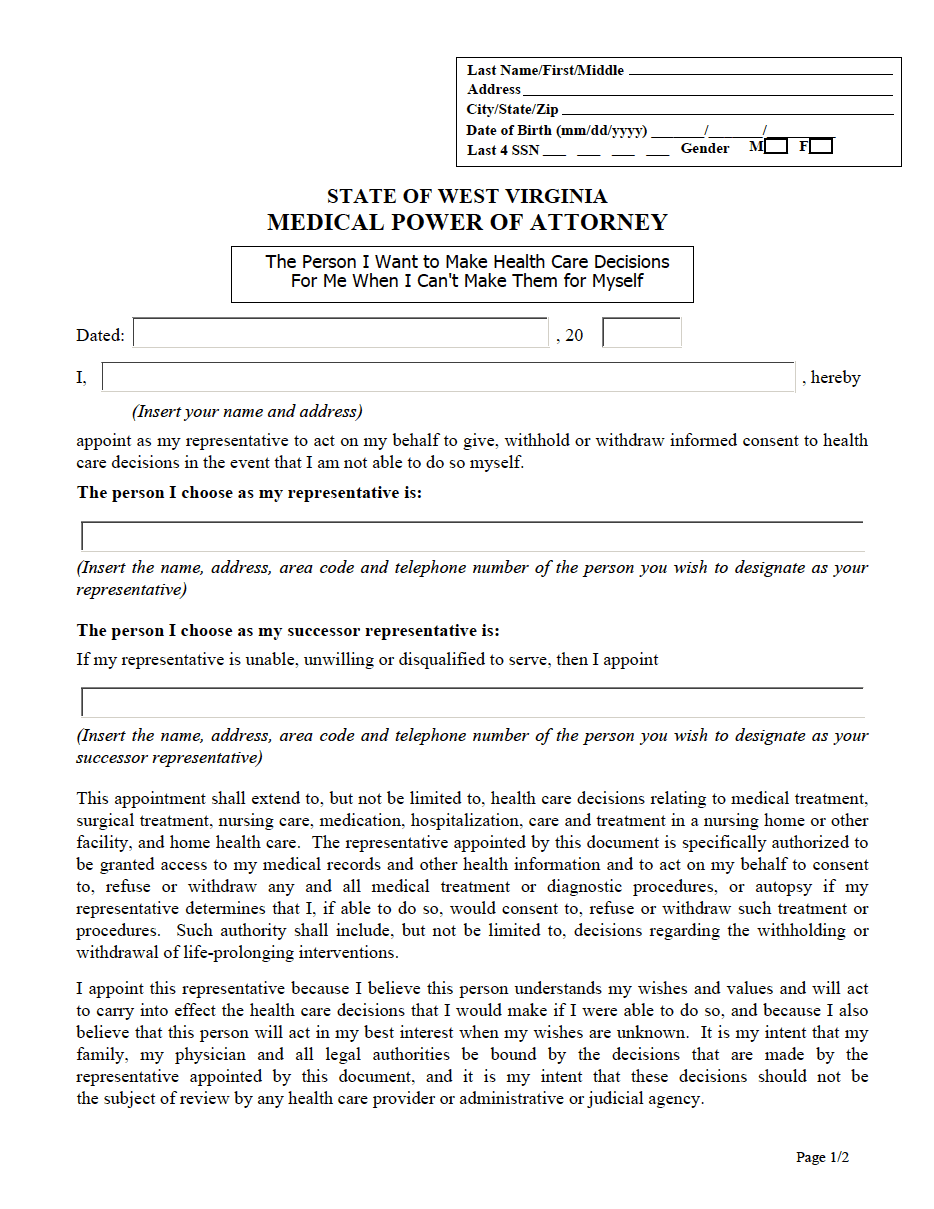
A West Virginia medical power of attorney is a form that permits the health care decisions of a person (the principal) to be handled by another person (the representative). The document only gives the representative this power if the principal becomes incapacitated. Being incapacitated means that a person has a condition (e.g., injury to the brain or spine, end-stage illness, or disability) that prevents them from discussing their preferred medical treatment. This medical power of attorney does not become effective unless a physician determines that the principal cannot speak for themselves.
A principal can fill out this form at any time in their life. However, many people complete it to ensure they have someone they trust communicating their health care wishes if they are not able due to a medical emergency. Others create a medical power of attorney before going under general anesthesia (just in case something happens to them during surgery) or after receiving a terminal illness diagnosis.
The representative should know the principal well enough to make an informed medical decision for them. This person must refer to the special directive and limitations section of the form before determining treatment. If the representative does not follow these instructions first, the principal can take legal action against them.
The principal can include any guidelines for treatment in the document. Essentially, it gives the representative greater or lesser decision-making powers. For example, the principal can state their preferences for tube feeding, cardiopulmonary resuscitation (CPR), breathing machines, dialysis, organ donation, funeral arrangements, or autopsy. They could also give information about spiritual, religious, or cultural beliefs they want the representative to consider when determining care.
Laws: § 16-30
Signing requirements (§ 16-30-4): The form (once completed) must be notarized AND signed by two (2) witnesses.