
Arizona Rental Lease Agreement Templates
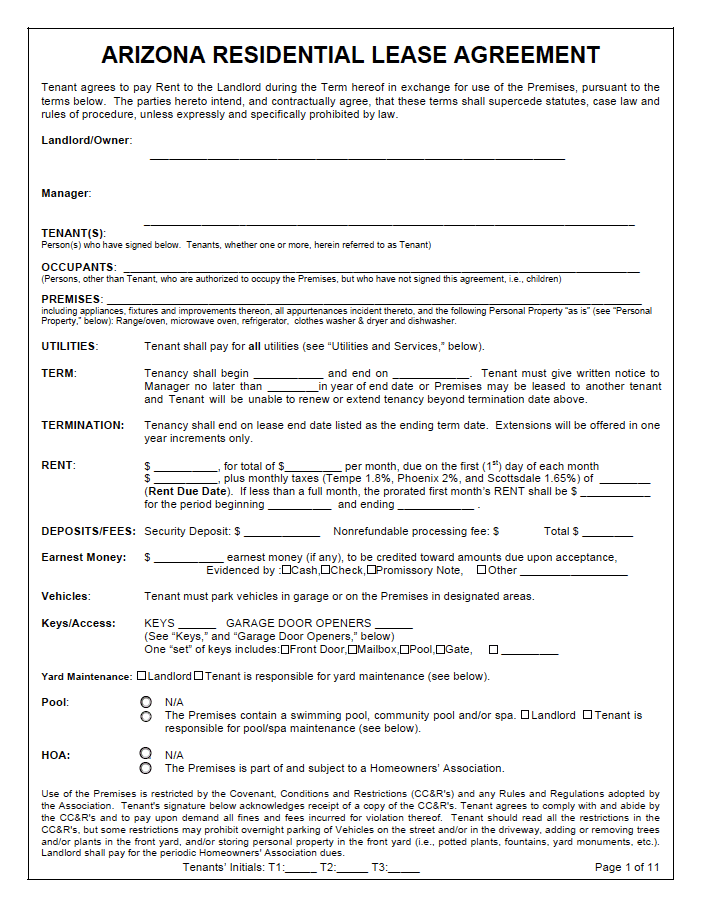
An Arizona rental lease agreement is a legally binding contract used for the renting of residential and commercial property. They are entered into by a landlord and one (1) or more tenants. The documents specify each party’s respective obligations in regards to a number of matters, including the rent due date, utilities and services, rent amount, furnishings, and any unique tenant and landlord obligations. In addition to providing financial security for landlords, the forms serve as a guide during leasing, allowing the parties to look back on the document for clarification on rules, payments, and other information.
Types (6)
| Commercial | Lease-to-Own | Monthly | Roommate | Standard | Sublease |
Which Form is Right for Me? | |
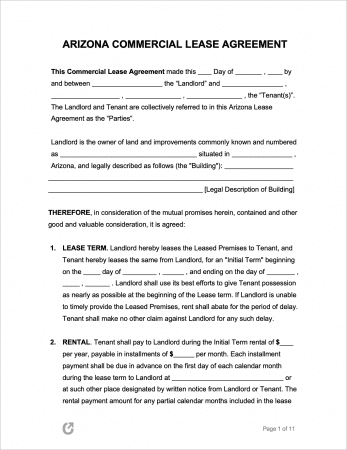
| Commercial | A contract that is formed between a property owner and a business-owning tenant. |
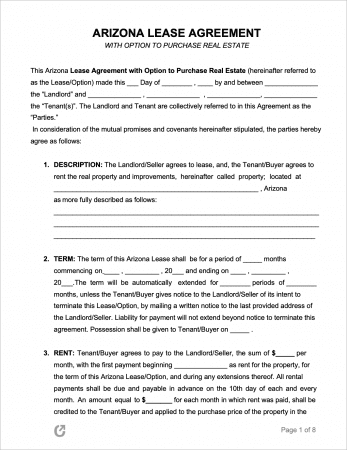
| Lease-to-Own | A residential agreement that includes an addendum for allowing a tenant to purchase the rented property at the end of the lease. |
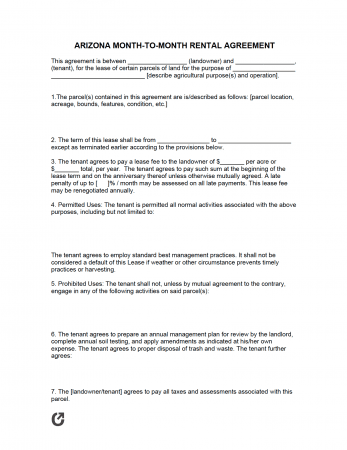
| Month-to-Month | Should be used if the landlord wants to rent their property to a tenant for an undetermined length. Renews on the first of every month. Either party can terminate the contract with a single months’ notice. |
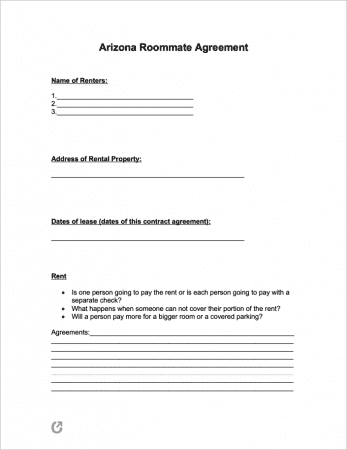
| Roommate | A tenant-only form that is used for creating schedules and rules that apply to all the tenants living in the space, for the purpose of promoting harmony and goodwill. |
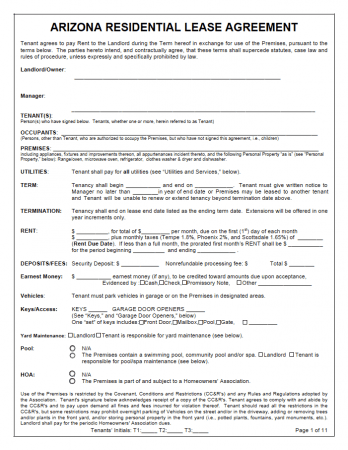
| Standard Lease | The most common type of rental contract. For renting any type of residential property (such as a home, condo, or apartment) for an average period of one (1) year. |
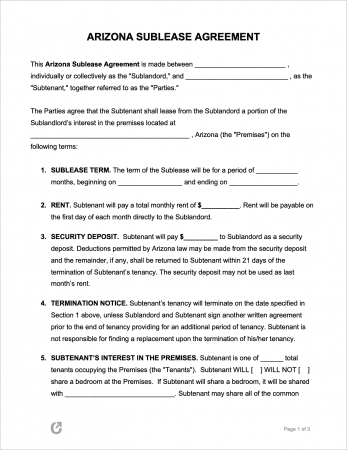
| Sublease | Allows tenants (with permission from their landlord) to re-rent the property they are leasing to a new tenant. |
What is an Arizona Lease Agreement?
An Arizona Lease Agreement provides clearcut legal conditions that both a landlord and tenant(s) agree to follow for the full length of the lease. The agreement provides certain legal protections to both parties, as well as responsibilities to uphold. Prior to signing a lease agreement, landlords should ensure they provide tenants with a rental application as a means of verifying their credentials and trustworthiness.
State Laws & Guides
- Laws: Title 33, Ch. 3 “Landlord and Tenant”
- Guide to Tenant Law: Arizona Tenant’s Rights Handbook
When is Rent Due?
According to (§ 33-1368(B)), rent must be paid on the date stated in the agreement. Landlords may charge a late fee if rent is overdue; however, the fee must be reasonable and clearly specified in the written agreement.
Landlord’s Access
Emergency (§ 33-1343(C)): In the case of an emergency, the landlord may enter the dwelling unit without the consent of the tenant at any time.
Non-Emergency: The landlord must provide the tenant at least two (2) days’ notice of the landlord’s intent to enter, and they may only enter at reasonable times.
Landlord’s Duties
Per § 33-1324, landlords are required to comply with the following:
- Make any and all necessary repairs to the rental to ensure it is habitable by the tenant(s),
- Keep common/general areas both clean and safe,
- Maintain and keep all systems available to the tenant(s) of which include the electrical systems, HVAC, elevators, plumbing, and more.
- Ensure tenant(s) have a means of disposing of their garbage (receptacles, garbage pickup services, etc.), and
- Provide clean and hot running water, and supply air conditioning in units in which it is offered (or where weather demands).
- Comply with all requirements as stated by AZ § 9-1303.
Tenant’s Duties
In accordance with § 33-1341, tenants have to act in compliance with the following:
- Comply with all tenant-directed building codes,
- Keep their rented portion clean and safe,
- Throw away trash in a safe matter and in-compliance with the rules as stated by the lease,
- Keep all fixtures clean (as feasible),
- Notify the landlord of any new or existing issue that requires their assistance,
- Refrain from disturbing neighboring tenants (or the landlord), and
- Use included appliances and other systems the way they are supposed to be used.
Required Disclosures
- Bedbug Disclosure (§ 33-1319): Landlords are required to provide bedbug educational materials to both existing and new tenants, which must include bedbug prevention strategies among other information. In the case that the landlord knows of a current bedbug infestation in their dwelling, they shall not enter into any lease agreement with a tenant.
- Disclosure of Landlord and Tenant Act (§ 33-1322-B): The landlord should inform the tenant in writing that the “Arizona Residential Landlord and Tenant Act” can be obtained from the Arizona Department of Housing’s website. This should be done at or before the commencement of the tenancy.
- Lead Paint Disclosure: Prior to the lease taking effect, federal law dictates that landlords must disclose known information about housing built before 1978 regarding lead-based paint and associated hazards. Landlords must also provide this pamphlet concerning the matter.
- Name and Addresses (§ 33-1322): The landlord must disclose the name and address of the property owner as well as anyone authorized to manage the property.
- Move-In Documents (§ 33-1321-C): Once the tenant moves in, the landlord must provide a signed copy of the lease to the tenant. They must also provide a move-in checklist that specifies any existing damages to the dwelling unit and written notification to the tenant that the tenant may be present at the move-out inspection (found below).
Security Deposits
Security Deposit Statute: § 33-1321
Maximum Amount: A landlord cannot demand or receive security, including prepaid rent in an amount or value of more than one and one-half (1.5) month’s rent. However, the tenant can voluntarily pay more than one and one-half (1.5) month’s rent in advance if they choose to.
Returning to Tenant: If the tenancy is terminated, property or money held by the landlord as prepaid rent and security may be applied to the payment of all rent. It is also subject to a landlord’s duty to mitigate all charges as specified in the signed lease agreement or as provided in this chapter.
Deposit Interest: No relevant AZ statute.