
Georgia Power of Attorney Forms
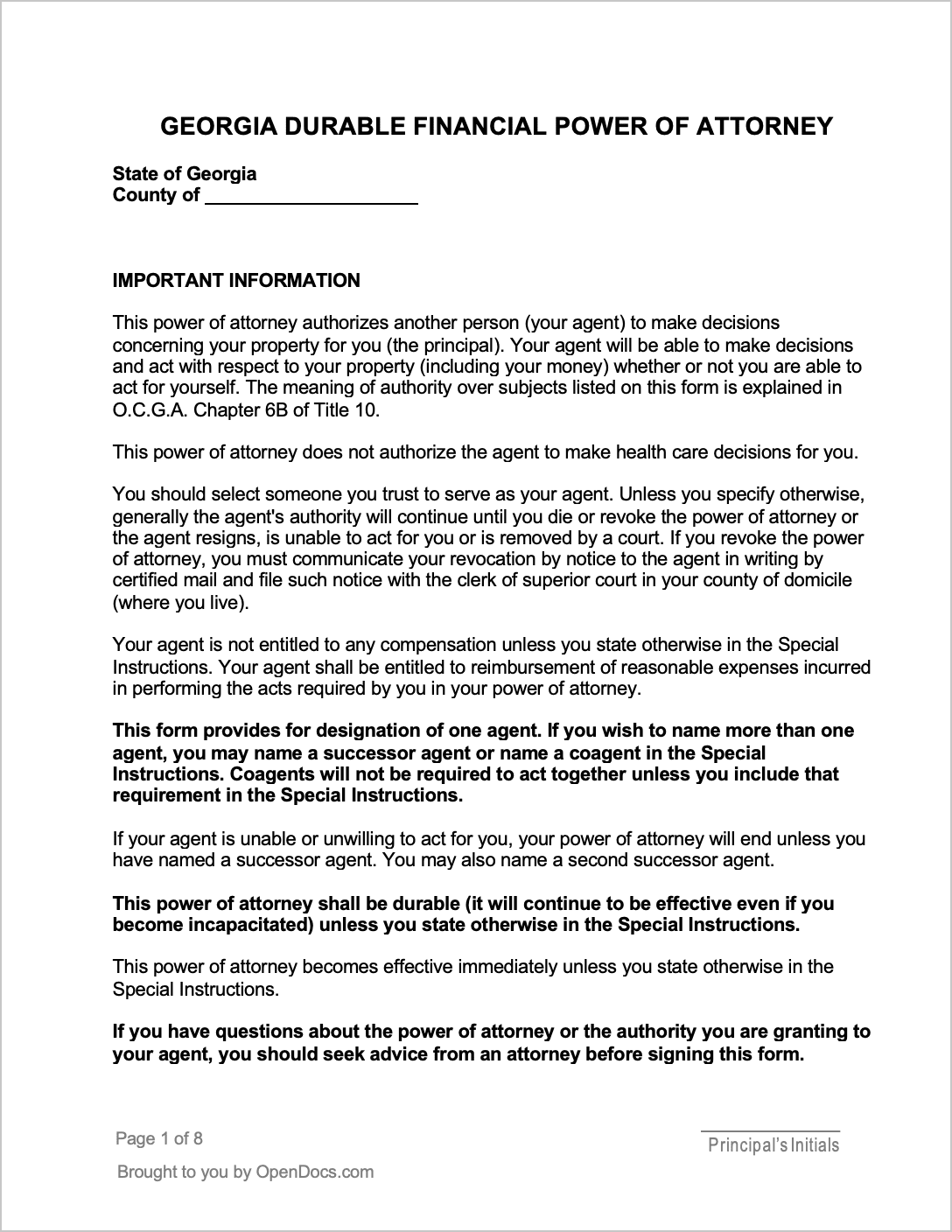
Georgia power of attorney forms legally grant decision-making powers to a person for either a set amount of time, permanently, or after a specific event. The principal’s purpose for completing the form is to have decisions made for themselves when they are unable to do so themselves. The principal can select anyone to be their agent, although family and close friends are among the most commonly selected.
- Laws: Title 10, Ch. 6B, Article 1
- Definition of Power of Attorney (§ 10-6B-2(7)): “means a writing or other record that grants authority to a person to act in the place of an individual, whether or not such term is used.”
- Definition of Advance Directive (§ 31-32-2 (1)): “means a written document voluntarily executed by a declarant in accordance with the requirements of Code Section 31-32-5.”
Types (6)
| Ad. Directive | Durable | General | Limited | Minor | Vehicle |
Which Form is Right for Me?
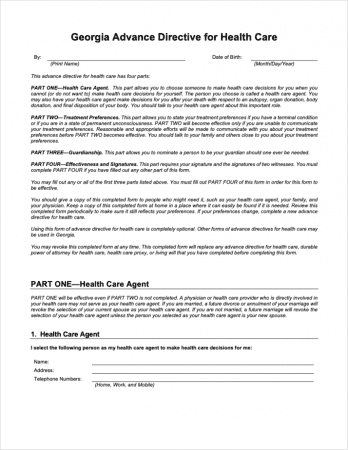
| Advance Directive | For establishing the person whom will have the responsibility of communicating the principal’s medical wishes should the principal not be able to communicate (whether due to being under anesthesia or incapacitation). In addition to naming an agent, the form also provides the principal with a means of recording their personal wishes regarding treatment (whether they would want CPR, a feeding tube, etc.). In order to be legally binding, the form must be drafted and signed while the principal is of a sound mind. |
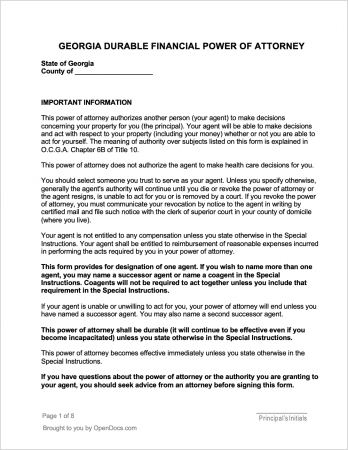
| Durable | The standard POA for granting decision-making powers over finances. The form is durable, which refers to the fact that it remains active regardless of the principal’s health. |
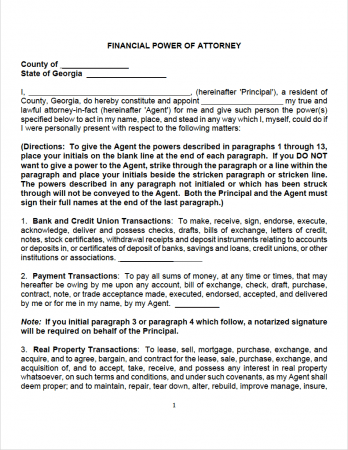
| General | Similar to the durable POA for finances, the general POA is used for assigning a representative who can make decisions over one’s estate and finances. The major difference: the contract terminates if the principal becomes incapacitated. |
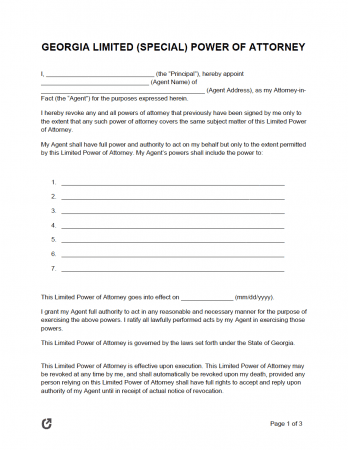
| Limited | A multi-use form that can be used for assigning the temporary right to handle nearly any task. For example, if the principal needed someone to collect rental payments for two months, they could assign someone they trust to collect and cash the checks with this POA type. |
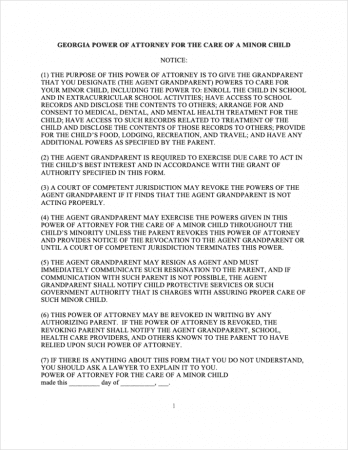
| Minor Child | Allows parents to designate an individual with the temporary right to take care of their child (or children). Commonly used in situations where the parents will need to leave their kids for an extended period of time, typically under 1 year. Common reasons include active duty, a prison sentence, or medical treatment. |
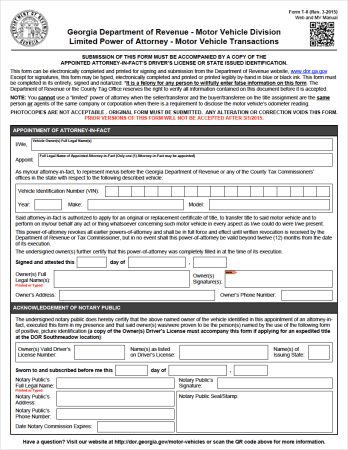
| Motor Vehicle (Form T-8) | The state-official form for giving someone the right to register, sell, or purchase a motor vehicle. |